Tag: death

  • June 5, 2025

    School’s Out, It’s Funeral Season

    So apparently part of sandwich generation life is taking pictures of your growing kids, holding signs, ending another school year, and experiencing All the Feels while you enter summer with them- tears in your eyes as your heart swells with pride, experiencing a different kind of exhaustion as you try to fit in work so that you can play when they play and accompany them on as many adventures as possible before the school bus arrives again and you wonder where the summer went again.

    And at the same time it is also true that while your friends’ kids, or maybe your own kids are graduating (or at least working toward some important goals as they graduate to the next school year), you’re attending more funerals, with tears in your eyes, of adults that were important in your life when you were meeting milestones or adult loved ones of your close friends. My parents in their mid 70s and dealing with health issues, but we are truly grateful for the time we get with them, a bonus of them living with us. But I am attending more funerals these days and it didn’t occur to me that that was coming. I attended my aunt’s funeral. She was my godmother and I remember feeling like I hit the lottery when I was invited to swim in her pool as a child. When she lived with my parents through part of her battle with cancer, it was very special to watch her connect with my kids during our visits. One of my best childhood friends texted another friend and I very recently to let us know she was in the midst of decision-making with her mom about whether or not she was going to go on hospice and her mom decided to proceed with it (but she also learned that if her mom improves significantly within a certain period of time she can come off of hospice. We’re learning every day). One of my very first best friends had to make the impossible decision to take her mom off of life support and we reconnected as my family learned she had passed, but I could not travel to the funeral as a surgery I underwent was too recent.

    Today Dad drove me to attend my uncle’s funeral. He was my uncle during my childhood and he was a great one. Divorce led to me not seeing him as often, but it was very meaningful to me to hug my cousins (his children) and his grandchildren and pay my respects at a celebration of his life where they truly honored him. Seeing the photo slideshow brought back a rush of memories of the home he shared with my aunt that was just a street away from the house where I grew up. Every piece of furniture and home decor in the background awakened the best thoughts of family gatherings and holidays. One of the places where I learned about the warmth of family was when visiting that home. Hearing his children and grandchildren and friends, including my dad, speak about his character and the positive way he lived his life was special, but surreal. It is unbelievable to me how quickly life feels like it goes and I experienced decades knowing him. But it goes so fast. And you never know. And even when you know it’s coming, as was true this time (he battled Cancer and was on hospice), it’s not easier, iykyk, and you still can’t predict when you will be in the funeral home, the church, the chosen place of sharing memories.

    The sandwich generation hits different. The experiences are so diverse and can truly feel like ping-ponging back and forth from grief to hope, loss to abundance, spent energy to the fullest heart, and SO much can be true all at once. Adulting next level. A Gen tug of war. It’s all happening now and we’re responsible for all of it happening smoothly.
  • March 28, 2025

    Patient Refused

    I need to do a deep dive back through Mom’s hospital notes (In my spare time) to see how her patient refusals that I’ve heard so much about are documented. From the few I’ve taken a peek at, I am disappointed by how little detail is recorded about Mom’s stated reason for her refusal in many cases.

    One stand out area of “self-limiting behavior,” as one Physical Therapist coined it at an intensive rehab Mom went to for therapy during our current 7 month journey, was declining PT during periods of abdominal discomfort or episodes of more intense abdominal pain. Mom also has terrible arthritis and now has bone on bone knees so walking around for her is excruciatingly painful. Medical professionals often agree that she is physically able to take more steps than she typically does, but as it is difficult to experience someone else’s pain directly, it’s just an area of significant difficulty that impacts her treatment. She is being treated for ongoing Adhesive Disease following a hernia repair and bowel blockage surgery. Along the way she has had a significant post-surgical infection during which she experienced so much pain that she could not tolerate food or liquids and they ended up putting her on TPN (total IV nutrition). We learned later that there was so much junk in the TPN that it caused her to gain weight at a time when her extra weight was a limiting factor as well.

    Hospital Tip: No matter how uncomfortable your loved one feels, if they need PT and OT while inpatient I strongly advise them to participate when the PT and/or OT is in their room. Now PT and OT will not allow the patient to continue beyond what they truly can handle (for example if they become dizzy, they will have the patient sit down or if the patient’s BP is too high or too low for activity they are not going to push those limits). But you should know that not only are there far too few PTs and OTs (and I’m quite sure this is true for Speech Therapists and other specialties as well, but we do not yet have experience with a need for Speech support) working in regular inpatient hospitals to meet the need, but Also your loved one’s “refusals” are being counted and held against them.

    What do I mean by that? Anytime your loved one is in need of some kind of aftercare for which the patient and family are not paying out of pocket (and probably even in cases of private pay the notes are being examined to determine appropriate level of care) the admissions staff at the skilled nursing centers, intensive rehabs, or home health agencies are thoroughly reading through your loved one’s chart. They are not just looking for diagnoses and needs that they may or may not be able to meet, but they are also noting what kind of patient your loved one has been. If they are repeatedly asking PT and OT to come back later when they feel better (pro tip: they don’t have time to come back as there is already not enough of them to go around so if they ever do do that for you, Wow, they are trying to go above and beyond for you with limited resources) they are not considered the ideal patient and are unlikely to be accepted at an intensive rehab (more on the differences between aftercare facilities in a future post). They are also reading all about how the patient cooperates or does not cooperate with taking medications and with complying with nurse recommendations and provider orders. Your loved one’s moods and rough days while going through health issues that have them in the hospital are part of the clinical picture of them that may or may not set them up for success when you are hoping to get them a bed at the nicer facilities with better care.

    Early on when I was first learning about aftercare and how the facilities get a 1-5 star rating in PA from Medicare (It’s still not clear to me what all factors into that, but I think I just need more time for research), I called the only 5 star skilled nursing facility close enough to home that we hoped to have Mom go there for rehab. She had been rejected from this facility and at the time I did not know (and I think I really didn’t want to know) if that was because of her physical condition at the time or because Mom’s notes may reflect that she hadn’t been too keen on doing PT with abdominal pain (typically from ongoing partial bowel blockages) and her bone on bone knees. The facility had communicated back and forth with our hospital social worker and the social worker made me aware of the rejection. However, I thought that if this facility knew how dedicated we are as a family to bringing Mom home just as soon as she was just a little stronger and could get to know me by phone and see what a support system she has in her family and hear about all of the accommodations we have for her at home, they would surely reconsider admitting her. I was very wrong. Before I got much of a word in edgewise the admissions director snapped at me that Mom was reviewed by their whole team and she is rejected because she is at risk for readmission. No chance to explain who we are and what she has to come home to after a little support. I wonder if the hospital staff is considerate in the word picture they paint of the patient.

    You may find your loved one rejected from multiple facilities and if other desirable ones who would normally accept your loved one do not have a bed or cannot accommodate something (such as a wound vac) that your loved one is currently managing with temporarily, you may find yourself choosing between home before your loved one is ready and a couple of 1 or 2 star facilities while the hospital is announcing that your loved one is medically stable for discharge and you’d better make that impossible decision right away. And if you don’t, your option is to appeal to Medicare or start paying the full hospital bills after noon the next day.

    Key Takeaway for you: Talk about this with those you love. Demonstrating treatment compliance and noted refusals has proven very significant in opening and closing doors for Mom along the way. Think about how you will handle similar situations if you and your loved ones are faced with them.

  • May 22, 2025

    Hospital Hint: Leave a Voicemail with questions for the RN Case Manager first thing in the morning if that individual appears to care

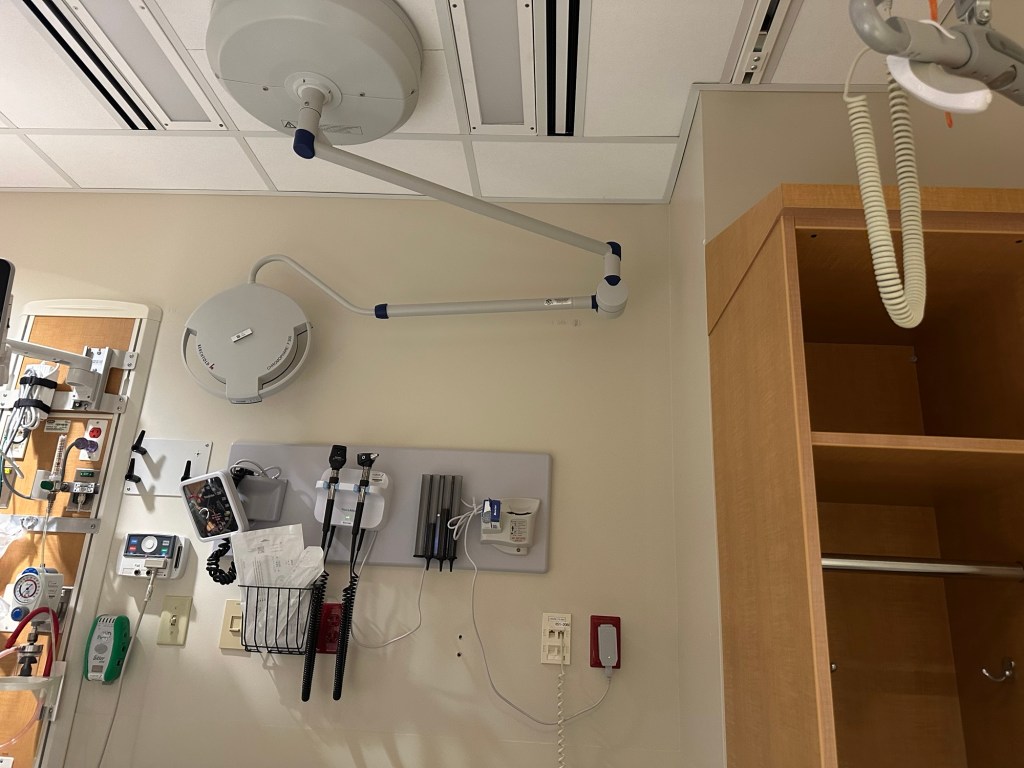
    I am trying to recall when I learned that Mom was not only assigned a social worker/case manager/aftercare planning extraordinaire, but also was assigned an RN Case Manager. I am deeply grateful that this position exists as it is a registered nurse (someone clinical who understands at least a significant amount of what’s going on medically) who participates in the medical team meetings regarding your loved one’s care. Get this person’s business card or jot down their phone number and extension ASAP. They are able to both send direct messages to the providers through a staff chat feature AND they sit in the treatment team meetings. If anyone is going to share your questions with the providers AND get an actual response, it seems it will be them. Our first RN Case Manager taught me that Mom did not have a Medical Team treating her, she had a Surgical Team treating her. She provided me with a number of correct terms in a supportive, respectful way.

    My understanding is that the bedside nurse, case workers, PT/OT, residents, and others have some access to the chat with the doctors, however the doctors (especially the surgeons) can be slow to respond. It is understandable that they are busy and the surgeons are often in surgery, but having a Nurse Practitioner or Physician’s Assistant on the team who can receive calls from family members and advocates is incredibly helpful and that option is not put into practice enough. During one lengthy hospital stay at the smaller hospital I did get a Nurse Practitioner who works with the surgeons to call me a time or two, but I don’t remember receiving helpful answers from those calls. The first RN Case Manager we had, however, communicated every question I had to the team and called me back with every answer she got. There was a time I was leaving her a message nearly daily for weeks with questions I came up with by tirelessly texting wonderful people I know who work in the medical field. That was my best access to a way to communicate my questions to the doctors during a time when solutions from them were far too few and getting calls directly from the surgical team were a near impossibility (I will describe exceptions to that as well as other solutions we came up with in another post). If you think you are going to ask an inpatient provider a question directly without quite a bit of effort, definitely manage your expectations about that (Tips on this another day).

    Unfortunately we were not assigned that original RN case manager with every readmission to the smaller hospital and the second one we had was more no-nonsense. She was courteous in asking to speak freely and I encouraged her to do so. Her recommendations surrounded accepting the readmits as the new normal and she described ways to learn how to stay home longer until things are extra emergent in hopes of making it to daytime hours and potentially seeking outpatient scans during daylight hours and maybe even a direct admission. She did not return calls very often and did not seem to want to pass on my questions as readily, attempting to talk me out of any suggestions I made about the surgeons being held accountable for finding a solution for my mom or directly referring her out. Also unfortunately during our most recent readmit to the smaller hospital, our original Case Management RN was back on Mom’s team, but she was colder and less involved (it seems there are penalties for readmits and after a while the hospital shows you they want to be rid of you, even if they have not resolved your loved one’s problem).

    Also less than ideal, at the larger hospital I was not given the phone number for the RN whose title I believe was Care Coordinator. The bedside nurse who went over Mom’s discharge instructions said he stands in the back, but rounds with the treatment team. Interestingly enough, it seems he may have been in charge of our botched home health admission most recently and never reached out to our family at all. At the larger hospital there was no EDD until day of and I was asked to come get my mom. The smaller hospital gave much better notice. Wondering how the larger hospital would have handled it if I said to them I could not come that day or that I had one brief conversation with the social worker and none with the RN Care Coordinator and was never given any advanced notice that the discharge was going to be that Monday.

    Just know that these are things that happen and that overall you are your loved one’s advocate. If you are fortunate enough you can receive help from some of the hospital staff, but it seems to be the exception quite often rather than the rule. But if you are seeking a line of communication beyond calling the bedside nurse (who will often help, but who is also often very busy with other patients), try the RN Case Manager with your medical questions as they can both put the questions in the chat to the doctors (so can the bedside nurse), but they can also communicate your questions and concerns at the treatment team meeting they attend. Leaving voicemails for them is one solid way to go as you cannot leave a voicemail for the doctors.